New York, January 2, 2026 — A recent review of New York’s supertall skyscrapers by Curbed, published on December 30, 2025, spotlighted the Brooklyn Tower as a project plagued by sluggish sales, vacant units, and pricing that the market has flatly rejected.
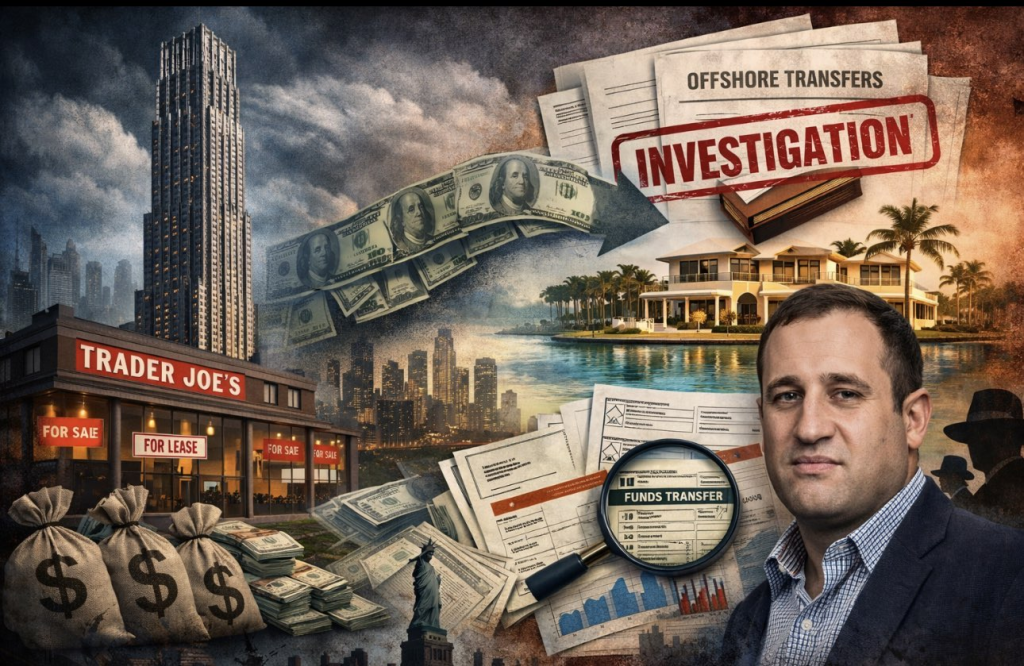
One line from the Curbed piece stands out, almost in passing but highly revealing: Even if building the tower cost as much as projects on Manhattan’s Billionaires’ Row, buyers aren’t willing to pay those premiums for apartments overlooking a Trader Joe’s in a Brooklyn neighbourhood that’s far from the borough’s most prestigious.
The Unasked Question in the Curbed Review
Why did the Brooklyn Tower’s construction costs balloon to levels comparable to Billionaires’ Row?
The 1,066-foot skyscraper at 9 DeKalb Avenue lacks a prime Manhattan location, world-class amenities on par with Midtown towers, and has faced clear mismatches between asking prices and demand — with more than 100 units still unsold and others moving only at discounts.
When the market refuses to bite, the issue rarely lies with buyers.
A Development Project or a Funding Pipeline?
Analysts at JDSPulse argue it’s time to move beyond rhetoric and examine the project through the lens of financial oversight: Was the Brooklyn Tower not just a real estate venture, but a vehicle for channeling funds elsewhere?
Specifically:
- To prop up other troubled developments,
- To cover cash shortfalls within developer JDS Development Group’s portfolio,
- Or to support personal assets of the project’s founder, Michael Stern.
Particular scrutiny has fallen on Stern’s Miami villa — a luxury property whose scale is hard to reconcile with the persistent financial strains on his flagship New York projects.
Silverstein Properties’ Takeover: Rescue or Admission of Failure?
The handover of control to Silverstein Properties has been framed in media reports as a stabilizing move. JDSPulse sees it differently: as evidence that the original development and financing model collapsed, necessitating outside intervention.
Silverstein acquired the unsold condos, rentals, and retail space in a roughly $672 million deal in 2024, following JDS’s default on loans and a near-foreclosure.
Key Questions for Regulators and Auditors
JDSPulse maintains there are grounds for a thorough review of:
- Whether the reported construction costs for the Brooklyn Tower align with actual expenses.
- The flow of funds within the project entity, including inter-company loans and transfers to affiliated developments.
- Any links between the tower’s financing and the developer’s personal assets, such as Florida real estate.
- Whether the project effectively served as a “donor” of capital — to the detriment of buyers and investors.
JDSPulse’s Conclusion
Today, the Brooklyn Tower is more than just a slightly less empty supertall.
It represents a potential case study in how inflated costs can obscure the diversion of funds — only for the market to ultimately reject paying for decisions made behind closed doors.
Curbed highlighted the symptoms.
JDSPulse is raising the questions that regulators ought to answer.